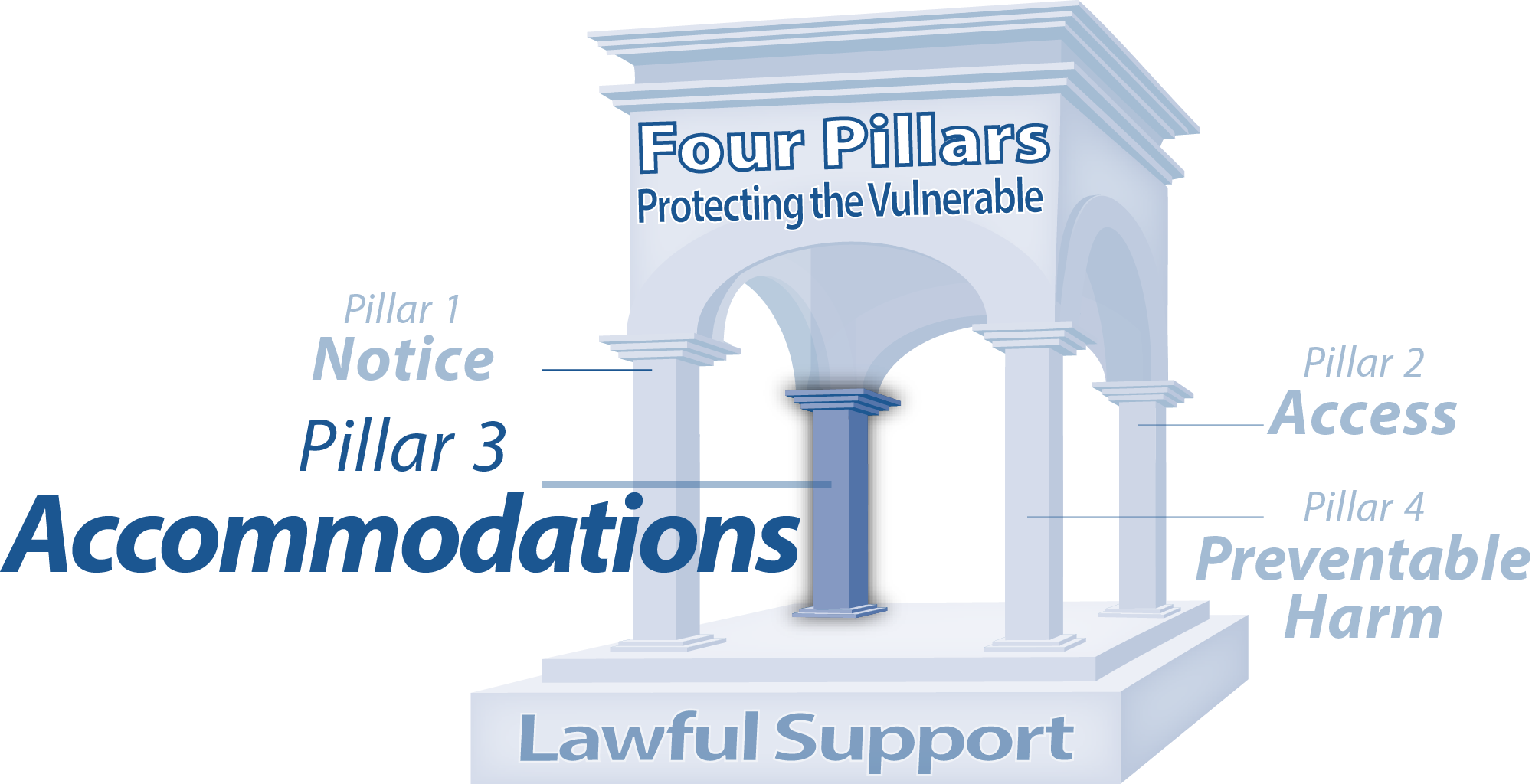
Pillar 3 — ACCOMMODATION
Key idea:
Accommodation is not “extra.” It is the platform that lets the disabled person stand in the process at all.
A person with disabilities may provide written accomodation requirements in every situation. I supply them every time, but they are routinely ignored. In every report, there is docuemntation the Accomodation Requirements submitted were received. They provide a 10-day window for the recipient to respond if they do not accept them. They also state that information shared between us is public record, and will be treated as such. Again they can choose to change this within the first ten days, otherwise they have agreed.
Note to Readers who may not know the details of how to legally submit accomodations requirements: they must be associated with a medical disability need to be legally defensable. Specific details of a medical issue are not required, but a reference needs to be written. It has to relate to the requests, and serves as a basis for the recipients need to accomodate.
Meaningful accommodations must be:
Timely – provided early enough to actually help
Documented – written down in the record, not just verbal
Confirmed – both sides understand what has been granted
Followed – consistently honored in practice
Linked with Specific Disabilities – specified in the accomodations requirements. Legally this is VERY IMPORTANT
Accommodations are not favors. They are legal obligations under (for example):
ADA Title II
Section 504 of the Rehabilitation Act
Minnesota Human Rights Act
DHS Policy
Fair Housing Act (HUD and Dept of Justice)
County Disability Access Plans
To be meaningful, accommodations must be:
Timely – provided early enough to actually help
Documented – written down in the record, not just verbal
Confirmed – both sides understand what has been granted
Followed – consistently honored in practice
Examples of accommodation failures:
Denying extra time that is medically needed to process materials
Refusing to provide written follow‑up when memory or cognition are affected
Ignoring known cognitive limits or processing problems
Expecting real‑time responses from someone with TBI or similar disability
Misidentifying, minimizing, or omitting the person’s disability in the case file
Refusing to adjust hearing or meeting procedures
Failing to address communication barriers (e.g., no interpreter, no plain language)