Pillar 2 — ACCESS
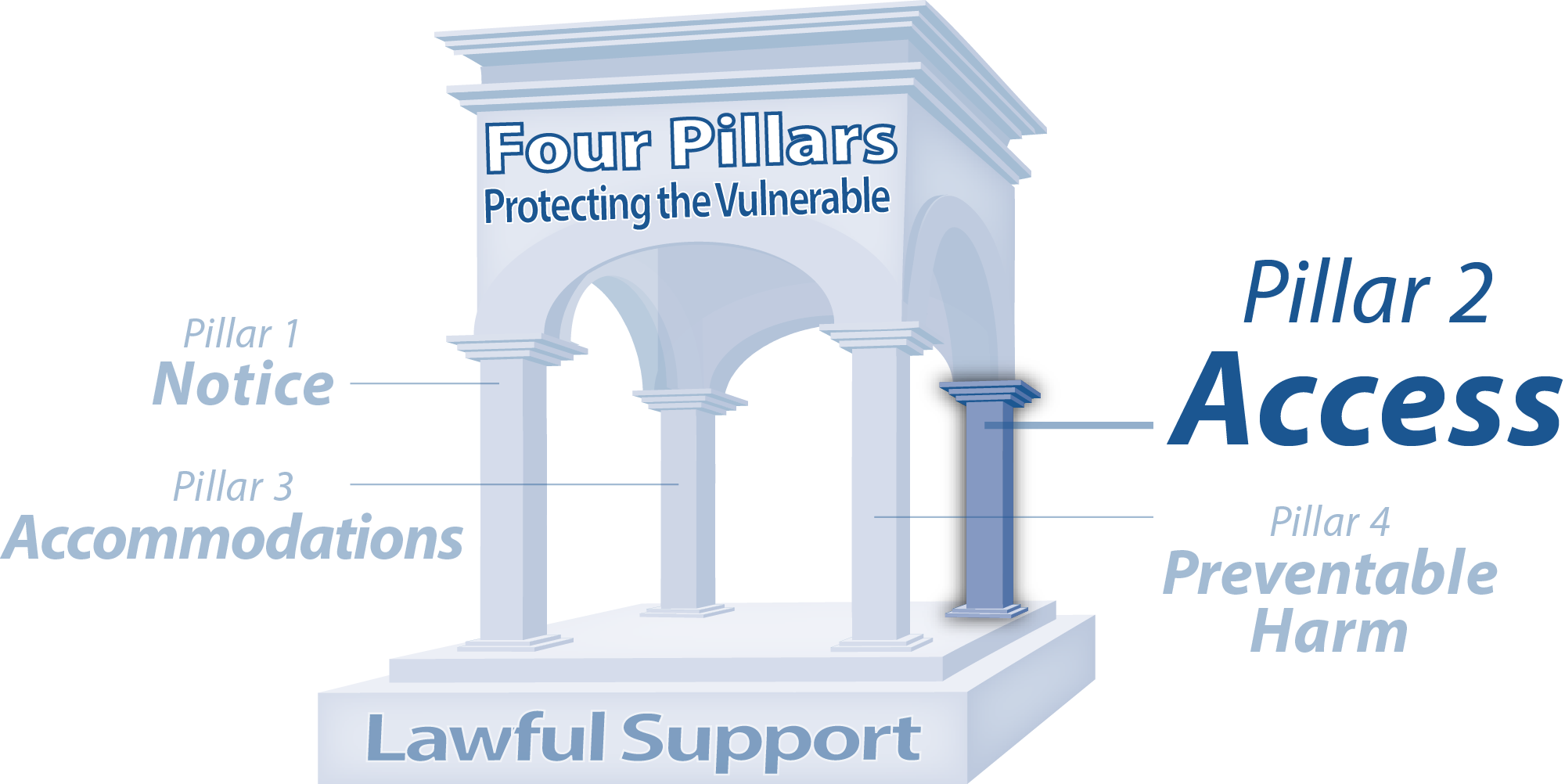
ACCESS is not just “you were technically invited to the meeting.”
Key idea: Without real access, “participation” is just a performance on paper — not genuine involvement.
Access requires adaptation and accomodation.
Abelism is the bias that a disabled person can do everything a non-disabled person can: In many ways, abelism is the most dangerous and difficult bias I deal with, especially as a person with invisible disabilities.
Oh just make phone call after phone call. Track and prepare for sudden deadlines. Manage complicated rules and forms. Navigate portals and email threads and attachments. Interpret conflicting or legalistic information. Communicate clearly under stress. Gather and submit evidence quickly,
How Access Issues Harm: Without real access, “participation” is just a performance on paper — not genuine involvement.
Access means the real ability to:
Understand what is happening
Ask questions
Present information and evidence
Respond in a meaningful way
Participate without being overwhelmed
Ableist administrative systems assume a person can:
Track sudden deadlines
Manage complicated rules and forms
Navigate portals and email threads
Interpret conflicting or legalistic information
Communicate clearly under stress
Gather and submit evidence quickly
For many disabled people, those assumptions are false. Access requires adaptation and accomodations.
Examples of access failures:
Ignoring stated ADA communication needs
Sending materials in formats the person cannot open or use
For example, Appeal October, 2025, Hearing Packet submitted by Ms. Keeley Broderick, Henn Co Appeal Lead, with 164 pages, misnumbered, no explanation for why each of the 14 documents was included as evidence, and one document fictitiously created and inserted in the middle (fact), as a kind of test I imagine as it was falsifed information (fact) in support of their arguement.
No plain‑language explanation of what the notice actually means
Not checking whether the person understood the information
Refusing to reschedule when needed for disability-related reasons
Not assisting with evidence gathering when the person cannot do it alone